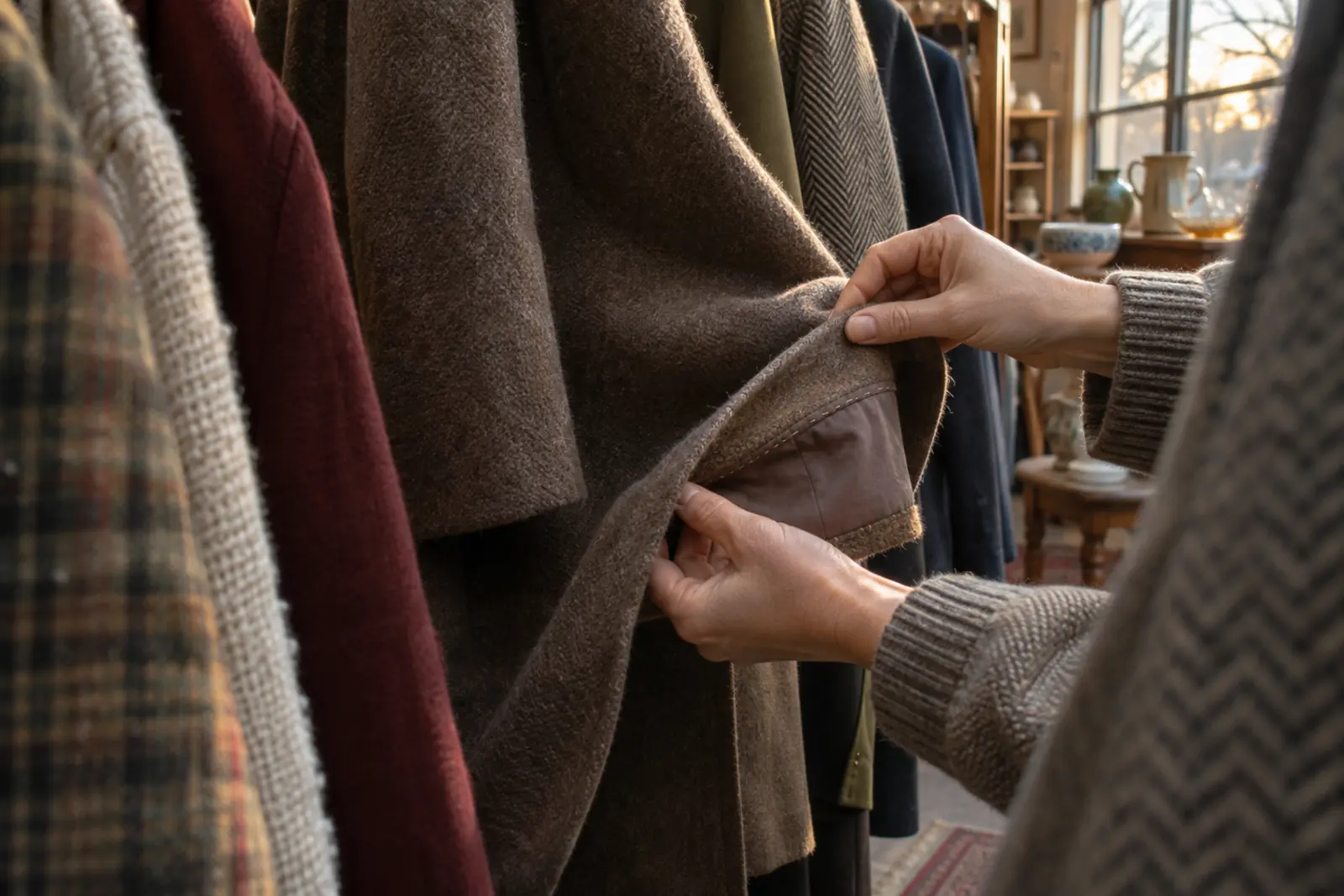
The secondhand clothing market is one of the fastest-growing retail categories in the world. ThredUP's annual resale reports (verify current figures at thredup.com) have tracked consistent double-digit growth in secondhand apparel for years, with the global market projected to reach hundreds of billions in annual volume before the end of this decade. Buyers are drawn by the savings, the access to discontinued styles, and the lower environmental cost of buying pre-owned. Sellers are drawn by how accessible it has become to convert a full wardrobe into real money.
But clothing presents challenges that most other pre-owned categories do not. Sizing is inconsistent across brands, countries, and manufacturing eras. Fabric condition degrades in ways that photographs do not always capture. Laundering history matters and is impossible to verify independently. And unlike a used phone or a used car, there is no model number to research or serial number to look up.
This guide covers both sides of the transaction. If you are buying pre-owned clothing, you will find a detailed inspection framework, a category-by-category breakdown of what is a smart buy versus what to skip, and a practical approach to sizing that actually works. If you are selling, you will find specific guidance on pricing, listing structure, and photography that gets items sold quickly and generates strong buyer feedback.
What to Check Before Buying Pre-Owned Clothing
The majority of buyer complaints in pre-owned clothing come down to one of four issues: fabric condition worse than described, sizing that does not match the label, undisclosed stains, or odors not mentioned anywhere in the listing. A systematic inspection protocol before buying - either in person or by asking targeted questions and requesting specific photos - eliminates most of these problems before money changes hands.
Fabric and Surface Condition
Pilling is the first thing to check on any knit fabric - sweaters, T-shirts, jersey tops, and fleece. Pilling is the formation of small fiber balls on the fabric surface, and it is permanent. It signals that the garment has been washed many times and that the fibers are breaking down. Light surface pilling on an otherwise good sweater can be managed with a fabric shaver, but heavy pilling across a large area means the item is near end-of-life regardless of brand or original price. Ask sellers for close-up photos of fabric surfaces, not just overall shots of the full garment.
Thinning is harder to spot in photos but equally important. The best test is to hold knit fabric up to a light source. If you can see your hand clearly through a solid-color jersey or T-shirt, the fabric is thinning. This is most common at collar edges, cuffs, underarms, and wherever the garment has experienced repeated friction. Thinning is not repairable and indicates a significantly worn item regardless of how the listing describes condition.
Color fading and discoloration appear most often on shoulders and upper backs where sun exposure concentrates during everyday wear. Denim in particular should be examined for uneven fading patterns and dye bleeding risk. Darker raw denim that has not been washed many times can transfer dye to light-colored items it comes in contact with. Sellers who have washed denim extensively should note this, as it means less bleed risk going forward.
Seams, Zippers, and Hardware
Check seams at every stress point: side seams, shoulder seams, and - for pants - the crotch seam and upper thigh area. Look for unraveling threads, stitch skips, and any areas that show signs of prior repair. A neatly repaired seam is not necessarily a dealbreaker, but it is a disclosure that belongs in the listing. An unrepaired split seam is a problem the buyer will inherit and pay to fix.
Test every zipper. For in-person purchases this is straightforward. For remote purchases, ask the seller directly whether all zippers open and close smoothly without catching. Metal zippers on quality outerwear can be replaced by a skilled tailor, but it is an additional cost to factor into your offer. Plastic zippers on inexpensive garments are harder to replace cleanly and are generally not worth the effort.
Check buttons: are all original buttons present, and do they match? A missing button that is easy to source is a minor issue. A missing button on a designer piece with custom or vintage hardware is a more significant problem. Inspect button stitching for looseness, particularly on coat front plackets and cuffs where buttons experience the most stress.
Stains and Discoloration
Stains are the most frequent source of buyer dissatisfaction in pre-owned clothing transactions. Sellers should photograph every stain against strong light at multiple angles. Buyers should ask this question directly: "Are there any stains, spots, or areas of discoloration anywhere on the garment?" A seller who laundered the item recently may genuinely not know about a stain visible only under certain lighting conditions.
Protein-based stains from blood and perspiration are the most difficult to remove and are often permanent after the garment has been laundered in hot water. Yellowing under collar edges and in underarm areas is a classic sign of accumulated perspiration buildup - this is usually impossible to fully reverse. Oil-based stains that have been through a hot dryer are similarly permanent, as heat sets them into the fibers.
When evaluating listings, request photos specifically of the underarm area, collar interior, and any area where staining commonly accumulates. A seller who is confident in their item's condition will not hesitate to provide these shots. Reluctance to photograph specific areas is a red flag worth taking seriously.
Odor Assessment
Smell cannot be conveyed in a listing photograph, yet it is a persistent friction point in pre-owned clothing transactions. When buying remotely, ask sellers directly about odor and storage conditions.
Cedar and mothball smell from long-term closet storage can usually be aired out over several days of hanging in a well-ventilated space. Smoke odor embedded in fabric fibers - from cigarettes or cooking - is significantly harder to remove and sometimes impossible without professional cleaning treatment. Mildew odor indicates possible mold exposure and requires enzymatic treatment before the item is usable. Sellers who store clothing in basements, garages, or non-climate-controlled spaces should always disclose this history.
The Sizing Problem - and How to Solve It
Vanity sizing has shifted dramatically over the past several decades, and size labeling is not standardized across brands, countries, or even manufacturing eras within the same brand. A "medium" from an American fast-fashion retailer in 2024 is a genuinely different physical garment from a "medium" from a Japanese streetwear label, an Italian tailoring house, or an American workwear brand from the 1980s. Vintage sizing in particular runs significantly smaller than contemporary sizing - a vintage women's size 14 from the 1960s corresponds roughly to a modern size 8 or 10 depending on the brand.
The only reliable approach is this: ignore size labels and buy based on actual measurements.
When buying, always ask sellers for the following measurements, taken flat with the garment laid on a surface:
- Tops, shirts, and jackets: chest measured across the front at armpit level and doubled to get full circumference, shoulder width from seam to seam, sleeve length from shoulder seam to cuff, and body length from collar seam to hem.
- Pants and jeans: waist measured flat across the waistband and doubled for circumference, hip at the widest point doubled, inseam from crotch seam to hem, and rise from front waistband to crotch seam and from back waistband to crotch seam if the item is high-rise.
- Dresses and skirts: bust, natural waist, hip, and total length from shoulder seam or waistband to hem.
- Shoes: Always confirm the stated size against actual insole length in centimeters, since US, UK, EU, and children's sizing systems all differ and are not fully standardized even within the US system itself.
Know your own measurements before shopping. Take them once and write them down. Having your chest, waist, hip, and inseam measurements on hand allows you to evaluate any clothing listing in seconds and completely removes guesswork from buying pre-owned clothing remotely.
As a seller, include measurements in every clothing listing you post. Listings with full measurements sell faster, attract buyers who already know the item will fit them, and generate fewer returns and disputes. This single habit will improve your seller metrics more than almost any other change you can make to your listing practice.
Best Categories to Buy Pre-Owned - and What to Skip
Not all clothing categories carry equal risk in the pre-owned market. Some items hold up remarkably well and represent genuine value at secondhand prices; others degrade in ways that are difficult to assess remotely or that make second-hand purchase inadvisable.
Strong Pre-Owned Buys
Denim is one of the best pre-owned clothing values available anywhere in the market. Jeans and denim jackets are durable, often develop character and patina with wear, and quality denim from established brands - Levi's, Wrangler, Lee, and Japanese selvedge labels - is expensive when purchased new. Look for consistent fading, no tears at stress points (crotch seam and upper thigh are the first to go), and functioning hardware. Denim with natural wear at the hem is cosmetic; tears at seam lines are a structural concern worth pricing into any offer.
Wool outerwear and coats are exceptional pre-owned purchases. Quality wool coats from reputable brands are expensive at retail and last for decades when properly stored. Pre-owned examples in good condition frequently sell for a fraction of their original price. When buying, check carefully for moth damage (small irregular holes, particularly in areas of natural fiber concentration), thinning at elbows, and lining delamination at the hem. A good wool coat that passes inspection is one of the highest-value items available anywhere in the pre-owned market.
Cashmere and merino sweaters are another strong category. High-quality cashmere depreciates in price much faster than it depreciates in quality. A lightly worn 100% cashmere sweater at 20 to 30 percent of retail is frequently an excellent purchase. The two things to check carefully are pilling and moth holes - both are the primary failure modes for cashmere stored improperly. Light pilling is manageable with a fabric shaver; heavy pilling or any moth holes are dealbreakers that significantly reduce value.
Blazers, suits, and formalwear from quality brands represent exceptional pre-owned value, particularly for buyers willing to invest a small amount in alterations. The construction quality in a good second-hand suit from an established brand often exceeds what is available new at the same price point. Check for repairable wear at collar points, buttonhole fraying, and lining condition at the hem. These are common and fixable issues - not reasons to avoid an otherwise excellent garment.
Vintage graphic tees from bands, events, and brands have strong collector and resale demand. Authenticity matters significantly in this category. Genuine vintage tees have distinct characteristics including single-stitch construction (standard before the mid-1990s), specific screen-printing techniques with cracked or faded ink that reflects age, and tag styles that authenticate to specific manufacturing eras.
Categories That Require More Caution
Athletic and activewear presents challenges because spandex and elastane - the elastic fibers that give leggings, sports bras, and compression shorts their stretch - degrade with washing and UV exposure in ways that are not visible in photographs. A pair of leggings that looks fine in a flat-lay photo may have lost most of its compression performance after dozens of wash cycles. Unless activewear is listed as new with tags or very lightly used, it carries meaningful risk when purchased remotely.
Shoes are possible to buy pre-owned but require care. Insoles and midsoles compress permanently with wear and cannot be restored to original cushioning and support. Buy shoes pre-owned only if they are listed as unworn, lightly worn with minimal heel compression, or are display-quality collector items where structural performance is not the primary concern. Ask sellers to photograph the insole surface and the inside of the heel to assess wear depth before committing.
Swimwear should generally be skipped in the pre-owned market for hygiene reasons and because chlorine and sun damage degrades elastic and fabric color in ways that are difficult to disclose accurately in a listing. The same applies to lingerie and intimate apparel, which should not be purchased pre-owned regardless of condition description.
How to Authenticate Pre-Owned Designer Clothing
The pre-owned clothing market attracts counterfeit designer goods at every price point, and authentication is a skill worth developing before making higher-value purchases. Here are the key signals to evaluate:
Labels and interior tags: Authentic designer labels use consistent fonts, precise stitching, and specific materials across product lines for a given era. Research the authentic label specifications for a brand before purchasing - authentication guides exist online for most major labels including Canada Goose, Levi's (for vintage pieces), Burberry, and virtually every luxury fashion house. Look for misspellings, inconsistent font weights, and cheap synthetic label materials.
Country of origin: Authentic luxury goods are manufactured in specific countries, and labels must accurately reflect production location under US import law. A "Made in Italy" label on a garment that shows construction quality inconsistent with Italian manufacturing is a significant red flag. Many counterfeits use correct brand names but incorrect origin labeling, or generic origin statements that do not match the brand's known manufacturing locations.
Zippers and hardware: Quality garments use specific hardware. Canada Goose uses YKK zippers; many European luxury brands use custom-branded hardware with the brand name stamped or engraved on zipper pulls and closures. A "luxury" jacket with a generic brass zipper and no brand markings on hardware is almost certainly not what it claims to be.
Stitching quality and density: Run your eye along any visible seam. Authentic quality garments show even, dense stitching without skips or inconsistencies. Counterfeits typically show looser, uneven stitching and may have thread tails left at seam ends where quality control was insufficient.
Interior finishing: Check interior seams, lining attachment points, and care label quality. Authentic luxury garments have clean interior finishing; counterfeits frequently have loose threads, cheap lining fabrics, and poorly attached care labels with printing quality inconsistent with the brand.
For high-value purchases - generally anything over $200 to $300 - consider using a professional authentication service. Services including Entrupy and Real Authentication exist for most major luxury clothing categories. The authentication fee is worthwhile relative to the transaction value and the cost of a fraudulent purchase that cannot be returned.
Pricing Pre-Owned Clothing to Sell
Pricing is where many sellers leave money on the table or stall their sales unnecessarily. The core framework is straightforward: most pre-owned clothing in good condition sells for 20 to 50 percent of original retail price. Brand equity, current demand for the specific style, and actual condition determine where in that range any individual item falls.
Apply premiums for:
- New with tags - items never worn command a significant premium over even lightly used examples
- Current-season or recently released styles with active retail demand
- Discontinued items with collector interest or strong brand equity
- Luxury and heritage brands - Levi's, Arc'teryx, Patagonia, North Face, and established fashion labels hold secondhand value better than fast-fashion brands
- Rare sizing - tall, plus size, and petite items that are genuinely harder to find in the pre-owned market
Apply discounts for:
- Items from several seasons ago with no vintage or collector interest
- Fast-fashion brands with limited secondary market demand
- Any disclosed flaws - even minor ones justify a price reduction relative to comparable items in better condition
- Items that have been laundered many times and show visible fabric softening or color dulling
Research pricing before you list. Search for the same item or close equivalents on the platforms where you plan to sell. Focus on completed sales rather than active listings - what buyers have actually paid is a more reliable data point than what other sellers are asking. This research takes ten minutes and produces significantly better pricing decisions than guessing.
Bundle pricing moves inventory faster and increases average transaction value. Listing coordinated pieces together - a matching blazer and trousers, a dress with its original belt, several tops from the same brand in the same size - often results in faster sales and better total returns than listing each piece individually at the lowest price that will clear it.
Writing and Photographing Clothing Listings That Convert
Clothing listings that sell quickly share the same traits: specific measurements, honest condition notes, and clear photographs that reveal both the best features and any flaws. Buyers cannot touch, try on, or smell your item. Everything they know about it comes from your listing.
Listing Content Essentials
Include every measurement, not just the size label. As discussed above, size labels are unreliable across brands and eras. Measurements are facts. Buyers who have been burned by inconsistent sizing will skip any listing that shows only a size label - and there are many such buyers in the pre-owned clothing market.
Include the full fabric composition from the care label - not just "cotton blend." If the label reads 72% cotton, 24% polyester, 4% spandex, list all of it. Fabric composition affects how an item feels, washes, drapes, and ages. Buyers with fabric sensitivities or specific care preferences need this information to make an informed decision. Sellers who omit it signal that they did not read the label, which raises questions about what else they may have missed.
Describe wash and care history honestly. Has the item been dry-cleaned, machine washed and tumble dried, or hand washed and air-dried? This context is particularly relevant for wool and cashmere, which can shrink or felt if washed incorrectly. A buyer wants to know the garment has survived proper care consistently.
Disclose every flaw - even minor ones. A tiny stain disclosed clearly in the listing text prevents a dispute later and maintains your seller reputation. Buyers who know exactly what they are receiving leave better feedback and are significantly less likely to request returns. The small perceived cost of full disclosure is nothing compared to the real cost of a negative review or a return dispute.
Photography That Sells
Photograph the garment flat on a clean, neutral background - white, light gray, or smooth light wood. Busy backgrounds distract from the clothing and make professional evaluation difficult. This applies to both buyers assessing condition and to how listing images present in search results.
Always photograph both front and back. This is a non-negotiable baseline for any clothing listing. A front-only photo is a half-listing and signals to experienced buyers that the seller is cutting corners.
Include a shot of the interior care label showing both size and fabric composition. This one photo builds trust and verifies the information in your listing text simultaneously. Sellers who include label photos see fewer "is this really a medium?" questions from prospective buyers.
Photograph every flaw in close-up detail, even minor ones. A close-up of a small stain demonstrates seller transparency and prevents disputes after delivery. Buyers who can see exactly what they are getting are buyers who complete purchases and leave positive feedback rather than opening cases.
Use natural light wherever possible. Position near a window and avoid flash photography, which flattens texture and creates harsh shadows that obscure fabric quality. Morning and late afternoon light is softer and more directional than midday sun, producing images that show fabric texture, color, and condition accurately. For structured pieces like blazers and coats, a hanger against a plain background shows the garment's silhouette better than a flat lay. For softer items like T-shirts and knitwear, flat lay photography usually shows the item more naturally and allows easy measurement reference.
Frequently Asked Questions
How do I know if a pre-owned clothing item will actually fit me?
Ignore size labels entirely and buy based on measurements. Ask every seller for chest, waist, hip, inseam, and length measurements depending on the garment type. Sizes vary significantly across brands, countries, and decades, so only actual flat measurements give a reliable fit prediction. Any seller unwilling to provide measurements should be treated as a red flag - confident sellers with well-fitting, accurately described items have no reason to withhold this information.
What types of pre-owned clothing should I avoid buying?
Skip swimwear, lingerie, and intimate apparel for hygiene reasons. Be cautious with activewear and compression garments, since elastane degrades invisibly with repeated washing and UV exposure - lost compression cannot be seen in photos. Shoes are risky unless listed as unworn or barely worn, because insoles and midsoles compress permanently with use and cannot be restored to original cushioning and support regardless of how clean the exterior looks.
How can I tell if a pre-owned designer item is authentic?
Check the label font, stitching quality, country of origin marking, zipper brand, and hardware finish against known-authentic reference photos for that specific label and era. Many luxury brands have detailed authentication guides available through dedicated enthusiast communities and resale platforms. For any purchase over $200 to $300, consider a professional authentication service such as Entrupy or Real Authentication before completing the transaction - the fee is small relative to the risk of a fraudulent purchase.
What is a fair starting price for pre-owned clothing?
Most pre-owned clothing in good condition sells for 20 to 50 percent of original retail price. Designer brands, rare sizing, and current-season items sit toward the higher end of that range; fast-fashion labels and older styles with no vintage interest sit toward the lower end. Research completed sales on comparable platforms to validate your pricing before listing - active listing prices tell you what sellers want, while completed sales tell you what buyers actually pay.
What measurements should I include in a clothing listing?
For tops: chest, shoulder width, sleeve length, and body length. For bottoms: waist, hip, inseam, and rise. For dresses: bust, waist, hip, and length. Take all measurements flat with the garment laid on a surface and always include the full fabric composition from the care label. These details let buyers shop by actual fit rather than size label, which significantly reduces returns, disputes, and negative feedback on your seller profile.
How do I remove odors from pre-owned clothing before selling?
Cedar and mothball odors typically dissipate after hanging the garment in a well-ventilated space for several days. Mildew odor suggests possible mold exposure and should be treated with an enzymatic cleaner before the item is listed or used. Smoke odor embedded deep in fabric fibers is extremely difficult to remove and sometimes impossible without professional treatment - sellers should always disclose it honestly, and buyers should factor remediation difficulty into any offer they make.
Before you list or buy, see condition grades and authenticating designer items.